Self-Theories (Dweck)

Summary: Carol Dweck and others have Identified two implicit theories of intelligence. Those learners who have an “entity” theory view intelligence as being an unchangeable, fixed internal characteristic. Those who have an “incremental” theory believe that their intelligence is malleable and can be increased through effort.

Originators: Carol Dweck, based on over 30 years of research on belief systems, and their role in motivation and achievement. Discussed in her book Self-Theories: Their Role in Motivation, Personality, and Development (1999).

Key Terms: entity theory, incremental theory

Self-Theories (Dweck)

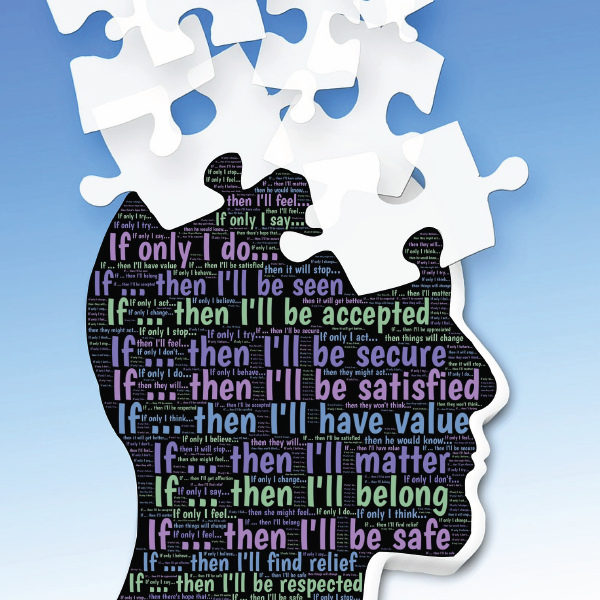
Carol Dweck (currently at Indiana University) describes a series of empirically-based studies that investigate how people develop beliefs about themselves (i.e., self-theories) and how these self-theories create their psychological worlds, shaping thoughts, feelings and behaviors. The theories reveal why some students are motivated to work harder, and why others fall into patterns of helplessness and are self-defeating. Dweck’s conclusions explore the implications for the concept of self-esteem, suggesting a rethinking of its role in motivation, and the conditions that foster it. She demonstrated empirically that students who hold an entity theory of intelligence are less likely to attempt challenging tasks and are at risk for academic underachievement.

Students carry two types of views on ability/intelligence:

GOMS Model (Card, Moran, and Newell)

Summary: The GOMS Model is a human information processing model that predicts what skilled users will do in seemingly unpredictable situations. Originators and proponents: Card, Moran and Newell in 1983[1]; Bonnie E. John and David E. Kieras in 1996[2]. Keywords: Goals, operators, methods, selection rules GOMS Model (Card, Moran, and Newell) This model is the general […]

Multiple Intelligences Theory (Gardner)

Summary: Multiple Intelligences Theory posits that there are seven ways people understand in the world, described by Gardner as seven intelligences.

Originator: Howard Gardner in 1983.

Key Terms: Linguistic, Logical-Mathematical, Visual-Spatial, Body-Kinesthetic, Musical-Rhythmic, Interpersonal, Intrapersonal.

Multiple Intelligences Theory

Developed by Harvard psychologist Howard Gardner in 1983 and subsequently refined, this theory states there are at least seven ways (“intelligences”) that people understand and perceive the world. These intelligences may not be exhaustive. Gardner lists the following:

Linguistic. The ability to use spoken or written words.
Logical-Mathematical. Inductive and deductive thinking and reasoning abilities, logic, as well as the use of numbers and abstract pattern recognition.
Visual-Spatial. The ability to mentally visualize objects and spatial dimensions.
Body-Kinesthetic. The wisdom of the body and the ability to control physical motion
Musical-Rhythmic. The ability to master music as well as rhythms, tones and beats.
Interpersonal. The ability to communicate effectively with other people and to be able to develop relationships.
Intrapersonal. The ability to understand one’s own emotions, motivations, inner states of being, and self-reflection.
This theory, while widely popular over the last two decades, has its share of critics. Some argue …

Self-Determination Theory (Deci and Ryan)

Summary: Self-Determination Theory is a theory of motivation and personality that addresses three universal, innate and psychological needs: competence, autonomy, and psychological relatedness.

Originators: Edward L. Deci and Richard M. Ryan, psychologists at the University of Rochester.

Key Terms: motivation, competence, autonomy, relatedness

Self-Determination Theory (Deci and Ryan)

Self-Determination Theory (SDT) is an important theory of motivation that addresses issues of extrinsic and intrinsic motivation. People have innate psychological needs:

Communities of Practice (Lave and Wenger)

Summary: Etienne Wenger summarizes Communities of Practice (CoP) as “groups of people who share a concern or a passion for something they do and learn how to do it better as they interact regularly.” This learning that takes place is not necessarily intentional. Three components are required in order to be a CoP: (1) the domain, (2) the community, and (3) the practice.

Originators: Jean Lave and Etienne Wenger in 1991 and further elaborated in 1998.

Key Terms: domain, community, practice, identity, learning

Communities of Practice

The term was first used in 1991 by theorists Jean Lave and Etienne Wenger who discussed the notion of legitimate peripheral participation. In 1998, the theorist Etienne Wenger extended the concept and applied it to other domains, such as organizations. With the flourishing of online communities on the Internet, as well as the increasing need for improved knowledge management, there has been much more interest as of late in communities of practice. People see them as ways of promoting innovation, developing social capital, facilitating and spreading knowledge within a group, spreading existing tacit knowledge, etc.

Communities of Practice can be defined, in part, as a process of social learning that occurs when people who have a common interest in a subject or area collaborate over an extended period of time, sharing ideas and strategies, determine solutions, and

Cognitive Apprenticeship (Collins et al.)

Summary: Cognitive Apprenticeship is a theory that attempts to bring tacit processes out in the open. It assumes that people learn from one another, through observation, imitation and modeling.

Originator: Collins, Brown and Newman

Key Terms: Modeling, coaching, scaffolding, articulation, reflection

Cognitive Apprenticeship

Around 1987, Collins, Brown, and Newman developed six teaching methods — modeling, coaching, scaffolding, articulation, reflection and exploration. These methods enable students to cognitive and metacognitive strategies for “using, managing, and discovering knowledge”

Modeling

Experts (usually teachers or mentors) demonstrate a task explicitly. New students or novices build a conceptual model of the task at hand. For example, a math teacher might write out explicit steps and work through a problem aloud, demonstrating her heuristics and procedural knowledge.

Actor-Network Theory (ANT)

Summary: Actor-Network Theory is a framework and systematic way to consider the infrastructure surrounding technological achievements. Assigns agency to both human and non-human actors (e.g. artifacts) Originator: Michel Callon[1] (1991) and Bruno Latour[2] (1992); John Law[3]; others. Key Terms: actor, network, generalized symmetry, equal agency

Experiential Learning (Kolb)

A four-stage cyclical theory of learning, Kolb’s experiential learning theory is a holistic perspective that combines experience, perception, cognition, and behavior. Contents Contributors Key Concepts Resources and References Contributors David A. Kolb (1939-) Key Concepts Building upon earlier work by John Dewey and Kurt Levin, American educational theorist David A. Kolb believes “learning is the […]